
Warehouse growth can bring exciting opportunities for a business, but it can also create new challenges. As inventory levels increase, businesses need to find practical ways to store more products without making facilities difficult to navigate. A warehouse that once had plenty of room can quickly become crowded when new products, higher order volumes, and additional equipment are introduced.
Storage planning can help businesses prepare for these changes. A pallet racking system can provide a structured approach to storing inventory while making more effective use of available warehouse space.
By considering current needs and future growth, businesses can develop storage strategies that support organization, accessibility, and efficient operations.
Assess Current and Future Storage Needs
Before changing a warehouse’s storage layout, businesses should evaluate how much inventory they currently handle and how those requirements may change. Looking only at current storage needs can result in a layout that becomes inadequate soon after installation.
Consider factors such as inventory volume, product dimensions, pallet weights, order frequency, seasonal fluctuations, and expected business growth. Businesses should also consider whether new product lines or changes in customer demand could affect storage requirements.
A storage assessment can reveal areas where existing space is being underused. For example, a facility may have significant unused vertical space or large areas that are difficult to access. Identifying these opportunities can help businesses make informed decisions about how to improve capacity.
Make Better Use of Vertical Space
As a warehouse grows, using available floor space more efficiently becomes increasingly important. One effective approach is to make greater use of vertical space.
Storing products across multiple levels can increase capacity without requiring a larger building. This approach can be particularly useful for facilities with high ceilings and limited floor space.
However, vertical storage requires careful planning. Businesses should consider ceiling height, product weight, equipment reach, structural requirements, and applicable safety standards before determining how high inventory can be stored.
The objective should be to increase capacity while maintaining practical access to products and sufficient room for employees and equipment to move safely.
Create a Scalable Storage Layout
Growth can be unpredictable, so businesses may benefit from storage arrangements that can adapt as inventory needs change. A rigid layout may become difficult to manage when new products are introduced or storage volumes increase.
A pallet racking system can be configured to accommodate different storage requirements, depending on the equipment and layout selected. Businesses can consider whether they need additional capacity, improved access to individual pallets, or storage arrangements designed around particular product categories.
Scalability should be considered from the beginning. Leaving some flexibility within a layout can make future changes easier and reduce the need for major warehouse reorganizations.
Businesses should also review their storage arrangement periodically. As operations evolve, the original layout may no longer be the most efficient option.
Organize Inventory Strategically
Increasing storage capacity is only part of the solution. Businesses also need to make sure employees can locate and retrieve products efficiently.
Inventory can be organized according to factors such as product type, demand, size, weight, or picking frequency. Frequently accessed products may benefit from locations that are easier to reach, while slower-moving inventory can be placed in less accessible areas.
Seasonal products may also require special consideration. Items with significant demand during certain times of the year could be moved to more accessible locations before the busy season begins.
A logical inventory arrangement can reduce unnecessary movement and make it easier for employees to understand where products belong.
Improve Inventory Visibility
Growing inventories can make it harder to keep track of products. Without a consistent storage strategy, employees may spend more time searching for specific items or determining where new inventory should be placed.
Clear labels can help establish recognizable storage locations. Businesses can assign location identifiers and maintain consistent naming conventions throughout the facility.
Inventory management software can provide additional support by recording product quantities and storage locations. Barcode scanning and other tracking tools can help employees update inventory information as products are received, moved, or shipped.
Combining physical organization with accurate inventory records can help businesses maintain better visibility as their operations expand.
Plan for Continued Growth
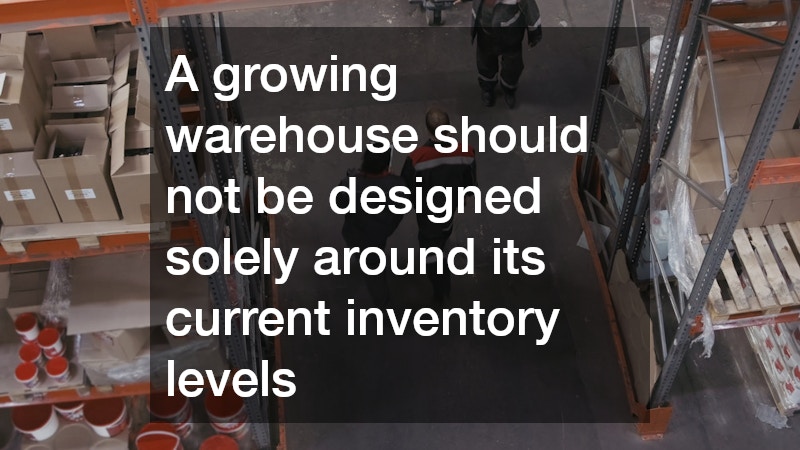
A growing warehouse should not be designed solely around its current inventory levels. Businesses can benefit from considering what their operations may look like several years from now.
Future growth projections can influence storage capacity, layout flexibility, equipment needs, and available floor space. Businesses should consider whether they expect inventory volume, product variety, or order frequency to increase.
A pallet racking system can be one component of a broader long-term storage strategy. When storage is planned around both current and anticipated needs, businesses may be better positioned to adapt without repeatedly redesigning their facilities.
Periodic reviews can help identify when additional storage, reorganization, or workflow changes may be necessary.
Warehouse growth requires careful attention to storage, organization, and workflow. As inventory levels increase, businesses need strategies that provide adequate capacity without creating unnecessary congestion or making products difficult to access.
A pallet racking system can help growing businesses create structured storage areas and use available space more effectively. However, successful warehouse expansion also depends on strategic inventory organization, practical aisle design, accurate tracking, employee workflows, and ongoing maintenance.
By planning for both present and future requirements, businesses can develop storage environments that are adaptable and organized. Taking a proactive approach to warehouse space can make it easier to accommodate growth while supporting efficient daily operations.