

Modern construction and renovation projects are rarely completed by a single specialist. Instead, they rely on carefully coordinated teams of trade professionals who each bring highly specific skills to the table. Whether building a new home, renovating a commercial space, or upgrading critical systems in an existing structure, success depends on timing, communication, and sequencing.
When collaboration is done well, projects move efficiently from one phase to the next with minimal delays, fewer costly mistakes, and higher-quality outcomes. When it is not, work gets repeated, schedules collapse, and budgets spiral out of control.
This article explores how different trade professionals work together across complex projects, what systems support better coordination, and how real-world workflows are structured to ensure efficiency from start to finish.
Early Planning and Cross-Trade Alignment on Core Systems

At the beginning of any construction project, one of the most important steps is establishing a clear foundation for coordination. This includes defining responsibilities, reviewing plans in detail, and identifying where different systems will intersect. When this phase is rushed or treated as optional, it almost always leads to conflicts in the field that are far more expensive and time-consuming to fix later than to prevent upfront.
In most residential and commercial builds, the relationship between plumbers and electrical contractor teams is one of the most critical early coordination points. Both trades often work in the same wall cavities, ceilings, and floor systems, meaning poor planning can lead to conflicts that are expensive to fix later. Even minor misalignment in pipe routing or conduit placement can force demolition of completed work, delaying the entire project timeline.
Effective early-stage collaboration includes:
- Reviewing blueprints together before construction begins
- Identifying shared access points for wiring and piping
- Agreeing on rough-in sequencing schedules
- Mapping out wall and floor penetrations in advance
- Establishing communication channels for on-site adjustments
To strengthen this process further, teams should also walk the physical site together before work starts. This helps translate paper plans into real-world conditions, where obstacles like beams, grade changes, or foundation offsets may require adjustments. In addition, confirming material specifications early ensures that pipe sizes, conduit types, and spacing requirements are consistent across both trades.
Practical coordination tips:
- Hold a joint pre-construction meeting with all mechanical and infrastructure trades
- Use color-coded digital plans to mark plumbing and electrical pathways
- Schedule overlapping work carefully to avoid physical interference
- Assign a site coordinator to monitor shared work zones
- Conduct a quick mid-week alignment check during rough-in phases to catch issues early
By aligning expectations early and reinforcing communication throughout the initial build stages, teams significantly reduce rework, improve jobsite efficiency, and ensure that foundational systems are installed correctly the first time without costly interruptions later in the project.
Managing Site Infrastructure and Structural Dependencies
Once foundational planning is complete, the project moves into site preparation and structural development. This phase often involves heavy coordination between infrastructure-related trades.
A utility contractor plays a key role during this stage, ensuring that water, sewer, electrical feed lines, and other essential services are properly routed into the site. At the same time, structural components such as framing and roofing begin to take shape.
The involvement of a roofing contractor must be carefully timed. Roofing cannot proceed too early, or it may be damaged by ongoing heavy equipment activity below. However, it also cannot be delayed too long, or interior work may be exposed to weather-related damage.
Key coordination practices include:
- Sequencing underground utility installation before structural framing
- Confirming site grading supports drainage and foundation stability
- Scheduling roofing installation after major exterior framing is complete
- Protecting installed infrastructure from heavy machinery damage
- Aligning delivery schedules for structural materials
Helpful workflow strategies:
- Develop a shared construction timeline visible to all trades
- Conduct weekly infrastructure coordination meetings
- Use temporary protective coverings for partially completed systems
- Stage materials off-site when possible to reduce congestion
This phase is all about precision timing. A single delay in utilities or roofing can create cascading setbacks across the entire project.
Coordinating Mechanical Systems for Efficiency and Performance

Mechanical systems are among the most complex and interconnected parts of any construction project. Heating, ventilation, air conditioning, and water systems must all work together seamlessly within tight spatial constraints. Because these systems often share the same physical space—ceilings, utility chases, and wall cavities—small planning errors can lead to major rework if discovered too late in the construction process.
Coordination between HVAC contractors and other mechanical specialists ensures that airflow, energy efficiency, and system performance meet design expectations. These teams often work alongside plumbers, electricians, and insulation installers, making sequencing essential. For example, duct routing may need to avoid plumbing stacks, while electrical wiring must be positioned to support HVAC controls without creating interference or overcrowding within framing bays.
Similarly, water heater repair contractors play a critical role during system upgrades or replacements in both new builds and renovations. Their work often depends on completed plumbing lines and accessible utility spaces. Proper placement of shut-off valves, service panels, and drainage paths must be considered early so that future maintenance can be performed without dismantling surrounding structures.
Best practices for mechanical coordination:
- Install ductwork and piping before insulation and drywall
- Verify system clearances before structural closure
- Conduct pressure and flow testing prior to finishing walls
- Ensure electrical connections are ready for HVAC equipment
- Schedule commissioning tests across all mechanical systems
Practical tips for smoother execution:
- Use 3D modeling tools to identify mechanical conflicts early
- Hold multi-trade walkthroughs before closing walls
- Label all mechanical lines clearly for future maintenance
- Establish testing checkpoints at each installation phase
- Coordinate equipment start-up dates so systems are tested together under real operating conditions
Additional planning consideration should also include future accessibility. Mechanical systems should not only function well at installation but remain serviceable for years to come. That means leaving adequate clearance around units, designing logical access paths, and avoiding overly compact installations that make repairs difficult.
When mechanical systems are properly coordinated, buildings operate more efficiently, require less maintenance, and deliver better long-term performance.
Coordinating Outdoor Systems and Landscape Integration
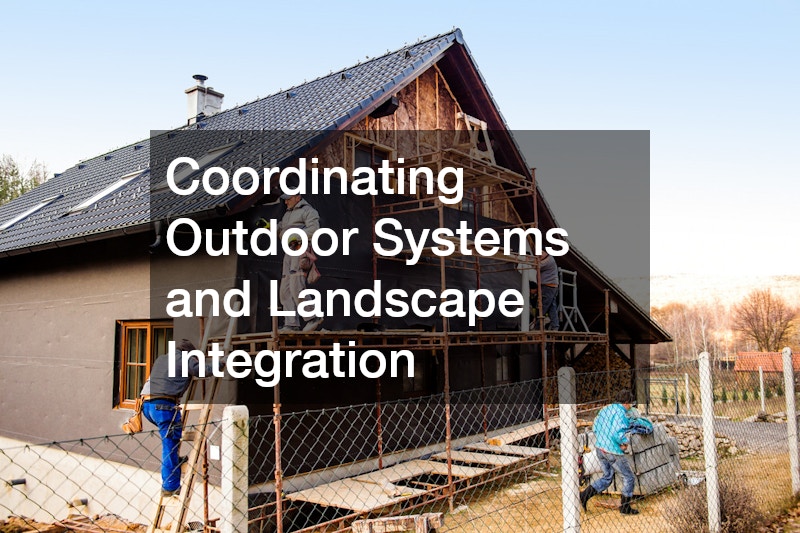
Outdoor construction adds another layer of complexity, as it combines functional infrastructure with aesthetic design elements. This phase requires careful coordination between excavation teams, electrical installers, and landscaping professionals. Unlike interior work, exterior projects are heavily influenced by weather conditions, soil stability, and seasonal timing, all of which can impact scheduling and installation quality.
Pool contractors are typically involved early in the exterior phase due to the need for excavation, plumbing, and structural installation below ground level. Their work must be integrated with grading plans and utility routing to avoid future conflicts. If excavation is not properly coordinated with underground utilities, it can result in costly damage or require re-digging already completed sections. Proper sequencing also ensures that structural reinforcements and water circulation systems are installed correctly before surrounding landscaping is finalized.
At the same time, a landscape lighting contractor must coordinate electrical access points, fixture placement, and wiring routes with both the landscaping design and existing site infrastructure. Poor planning at this stage can lead to exposed wiring, uneven lighting distribution, or the need to disturb finished surfaces to make corrections later.
Key coordination considerations:
- Align excavation schedules with underground utility placement
- Prevent damage to completed hardscapes during pool installation
- Ensure lighting wiring is installed before final landscaping finishes
- Coordinate drainage planning across all outdoor features
- Protect finished exterior surfaces during ongoing construction
- Account for soil settling and long-term grading changes before finalizing installations
Effective execution strategies:
- Use phased landscaping plans to avoid overlapping disruptions
- Install conduit systems early for lighting and pool equipment
- Conduct site inspections after each major outdoor phase
- Coordinate equipment access routes to minimize property damage
- Establish clear boundaries for heavy machinery movement to protect delicate landscape zones
Outdoor systems require especially careful sequencing because they combine permanent structural elements with highly visible aesthetic features. Once completed, these systems are difficult and expensive to modify, making upfront coordination one of the most important factors in achieving both durability and visual appeal.
Final Finishing Work and Specialized Structural Installations
As a project nears completion, attention shifts toward finishing work and specialty installations. This phase is highly detail-oriented and depends heavily on all prior work being completed correctly, because even minor imperfections earlier in construction become highly visible once finishing materials are applied. At this point, coordination becomes less about heavy construction and more about precision, sequencing, and protecting already completed work.
A painting contractor typically enters the project once drywall, trim, and surface preparation are fully complete. Any delays or defects in earlier stages can significantly impact painting quality and timelines. For example, uneven drywall seams, unsealed gaps, or lingering moisture issues can cause paint to bubble, crack, or fail prematurely. Proper coordination ensures that surfaces are fully cured, sanded, and cleaned before any coatings begin, allowing for a smooth and durable finish.
At the same time, pole barn contractors may be completing specialized structures that require coordination with site access, grading, and utility connections. These structures often serve agricultural, storage, or commercial purposes and must integrate into the overall property design. Ensuring these builds do not overlap with final interior finishing work is essential, as heavy equipment movement can damage completed surfaces or disrupt final inspections.
Key finishing coordination principles:
- Ensure all surface work is complete before painting begins
- Protect finished surfaces from ongoing construction traffic
- Schedule final structural builds to avoid interference with finishing work
- Conduct detailed inspections before final coatings are applied
- Align cleanup and site restoration with project completion timelines
- Confirm all environmental conditions (humidity, temperature, ventilation) are suitable for final materials
Helpful execution tips:
- Use protective coverings for floors and fixtures during painting
- Conduct moisture and temperature checks before applying finishes
- Coordinate punch-list reviews across all trades simultaneously
- Finalize utility connections before completing specialty structures
- Perform final walkthroughs with all contractors present to ensure no issues are missed
This stage determines the visual and functional quality of the entire project, making precision and coordination essential. Careful attention to detail during finishing not only enhances appearance but also ensures long-term durability, efficiency, and client satisfaction.
Communication Systems That Support Multi-Trade Coordination
Behind every successful construction project is a strong communication system. Even the most skilled teams can experience delays and errors without structured coordination tools. As projects grow in size and complexity, the number of moving parts increases, making it essential that every trade operates from the same set of accurate, up-to-date information.
Modern project management relies heavily on centralized platforms that allow all trades to stay updated in real time. These systems help track progress, assign tasks, and document changes across multiple teams. When used correctly, they reduce confusion caused by outdated drawings, verbal instructions, or inconsistent reporting between jobsite crews and project managers.
Effective communication practices include:
- Daily or weekly coordination meetings on-site
- Centralized digital project dashboards
- Real-time issue reporting systems
- Standardized documentation formats for all trades
- Clear escalation procedures for conflict resolution
- Scheduled progress check-ins during key construction milestones
In addition to these core practices, successful projects often rely on visual communication tools such as annotated drawings, progress photos, and shared site maps. These tools help ensure that even complex instructions are clearly understood across different skill sets and experience levels.
Key benefits of strong communication systems:
- Reduced rework due to miscommunication
- Faster resolution of on-site issues
- Improved accountability across teams
- Better visibility into project timelines
- More efficient resource allocation
- Stronger coordination between overlapping trades working in shared spaces
Practical recommendations:
- Assign a dedicated project coordinator or manager
- Require all trades to log progress updates daily
- Use shared digital drawings to avoid version conflicts
- Document all change orders immediately and clearly
- Maintain a single source of truth for project updates to prevent conflicting instructions
- Encourage open communication between foremen to resolve issues before they escalate
Communication is the backbone of collaboration. Without it, even well-planned projects can quickly fall behind schedule, experience costly rework, and lose overall efficiency across every stage of construction.
Successful construction projects are built on more than technical skill—they depend on coordination, timing, and communication across multiple specialized teams. When trade professionals collaborate effectively, they transform complex, multi-stage projects into structured, manageable workflows.
From early planning and infrastructure setup to mechanical installation, exterior development, finishing work, and final inspections, each phase relies on the one before it. When teams stay aligned and communicate clearly, projects not only finish on time but also achieve higher standards of quality and durability.
Ultimately, strong collaboration turns construction into a unified process rather than a collection of disconnected tasks, delivering better outcomes for everyone involved.